
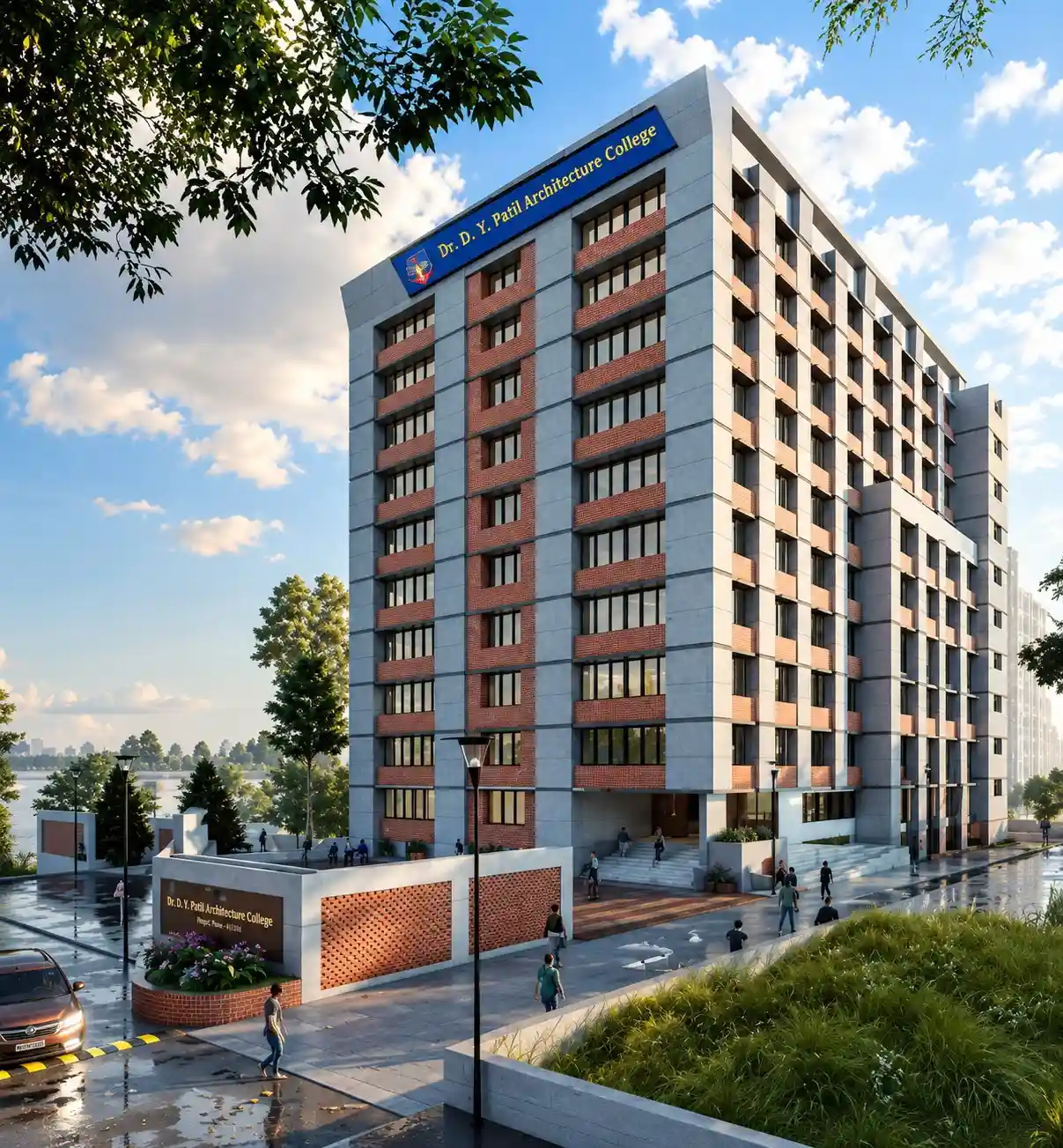
Bachelor of Architecture
Shape the future through creative design and sustainable architecture. Build innovative spaces that inspire generations.
About Program
The Bachelor of Architecture (B.Arch) program at DYPSOA offers a future-ready curriculum that combines the timeless principles of architectural design with advanced digital design and construction technologies. It equips students with strong foundations in architecture, while also developing expertise in computational design, Building Information Modeling (BIM), digital fabrication, virtual reality, and augmented reality, enabling them to design innovative and sustainable solutions for the evolving built environment.
5 Years
Course Duration
40
Intake
COA
Govt. Approved
9th Semester
Office Internship
What You Will Learn
The program equips you with the creative, technical, and professional skills required to design sustainable, functional, and future-ready built environments. Following the latest SPPU curriculum, the program is structured simply to help students build skills step-by-step.
- Architectural Design Studios: Learning how to sketch ideas by hand, create 3D scale models, and design spaces like houses, schools, commercial offices, and public parks.
- Building Construction & Technology: Understanding how different materials like brick, concrete, steel, glass, and wood behave under loads, alongside modern waterproof and insulation systems.
- Digital Tools & Software: Mastering industry-standard computational tools like AutoCAD, Revit (BIM), SketchUp, and Photoshop to create real-world blueprints and virtual 3D models.
Why Study Bachelor of Architecture in Pune ?
Studying Architecture in Pune at DYPSOA gives students the advantage of learning in a city known for strong academic culture, industry exposure, and a growing design ecosystem. This diverse built environment provides our students with easy access to site case studies, regular interactive visits to local construction projects, and direct training connections with top structural layout firms across the region.
Syllabus & Course Structure
The curriculum spans across 10 academic semesters (5 years), structured to move systematically from foundational design principles and graphics to advanced architectural engineering, internship, and final capstone thesis.
Year 1
- Basic Design
- Building Construction and Materials I
- Structures I
- Fundamentals of Architecture
- Architectural Drawing and Graphics I
- Computer Aided Drawing I
- Workshop I
- Architectural Design I
- Building Construction and Materials II
- Structures II
- Architectural Diagramming, Sketching, Visualisation
- Architectural Drawing and Graphics II
- Computer Aided Drawing II
- Workshop II
Year 2
- Architectural Design II
- Building Construction and Materials III
- Structures III
- Building Services I
- History of Architecture I
- Climatology
- Site Survey Systems
- Architectural Design III
- Building Construction and Materials IV
- Structures IV
- Building Services II
- History of Architecture II
- Environmental Science
- Indian Knowledge Systems Elective
Year 3
- Architectural Design IV
- Landscape Design
- Building Construction and Materials V
- Building Services III
- History of Architecture III
- Building Codes and Bylaws
- Working Drawing I
- Quantity Surveying and Specification Writing
- Architectural Design V
- Architectural Appraisal
- Building Construction and Materials VI
- Building Services IV
- History of Architecture IV
- Settlement Studies
- Working Drawing II
- Professional Elective
Year 4
- Architectural Design VI
- Design Elective
- Building Construction and Materials VII
- Design Detailing
- Research in Architecture I
- Interdisciplinary Elective
- Professional Practice and Conduct
- Architectural Design VII
- Creativity Elective
- Building Construction and Materials VIII
- Urban Studies
- Research in Architecture II
- Project Management
- Technology Elective
Year 5
- Practical Training
- Architectural Design Project
- Skill Elective
- Open Elective
- Entrepreneurship Development
Download the official SPPU University brochure for detailed information about programs, and academics.
Why Choose DYPSOA for B.Arch?
Develop creative, technical, and professional skills through an industry-focused curriculum, modern studios, and practical learning experiences.
COA-approved Bachelor of Architecture program
Build a Strong Architectural Foundation
Learn from Experienced Faculty and Mentors
Gain Practical Exposure and Industry Experience
Explore Research and Innovation
Discover Architecture Beyond the Classroom
Learn with a Future-Ready Curriculum
Excellent career and higher education opportunities
Career Opportunities & Professional Roles
Explore the diverse career paths and professional roles available after graduation, empowering students to build successful careers across industry, research, entrepreneurship, and higher education.
Architectural Designer
Lead conceptual design, spatial layouts, and construction blueprint workflows for residential and commercial structures.
Urban Planner
Design city master plans, public transit layouts, and high-density neighborhood frameworks using mapping data.
Computational Specialist
Build parametric structural models and generative design scripts inside advanced algorithmic pipelines.
Sustainability Consultant
Analyze structural energy metrics and guide projects toward carbon-neutral or net-zero global certifications.
Landscape Architect
Integrate built elements with regional topographies, natural water channels, and public parks.
BIM Coordinator
Supervise digital data streams, manage 3D structural models, and detect architectural element conflicts.
Interior Architect
Optimize indoor environments, detailing material textures, spatial ergonomics, acoustics, and structural custom fittings.
Architectural Journalist
Analyze urban trends, review critical theory, and publish research across leading architectural journals and media platforms.
Project Manager
Coordinate site resources, optimize budgets, and streamline timelines from initial groundbreakings to final key handovers.
Restoration Architect
Preserve historical heritage sites, upgrading old structures using modern building codes without damaging historic values.
Admission Process
Follow a simple step-by-step admission process from registration to final confirmation at DYPSOA.
Qualify NATA
Secure a valid NATA score to become admission eligible.
Qualify NATA
Secure a valid NATA score to become admission eligible.
Register for CAP
Complete online CAP registration and document verification.
Register for CAP
Complete online CAP registration and document verification.
Seat Allotment
Select DYPSOA and receive your admission allotment.
Seat Allotment
Select DYPSOA and receive your admission allotment.
Confirm Admission
Report to the institute and complete admission formalities.
Confirm Admission
Report to the institute and complete admission formalities.
Have Questions?
Our admission team is here to help you.
Frequently Asked Questions
Candidates must meet the following criteria:
- Passed 12th (HSC) with Physics, Chemistry, and Mathematics, OR
- Passed a 10+3 Diploma with Mathematics.
- Qualify the National Aptitude Test in Architecture (NATA).
- Fulfill the eligibility criteria prescribed by SPPU and the Council of Architecture (COA).
- And must have qualified NATA (National Aptitude Test in Architecture) as per Council of Architecture norms.
Applicants are generally required to submit the following documents during the admission process:
- 10th & 12th Mark Sheets and Certificates
- Valid NATA Scorecard
- School Leaving/Transfer Certificate
- Government-issued Photo ID
- Passport-size Photographs
- Category, Domicile, Migration, and Income Certificates (if applicable)
Additional documents may be required as per SPPU or admission authority guidelines.
Yes. As per the Council of Architecture (COA) curriculum, the B.Arch program includes:
- Mandatory Professional Training
- Architectural Design Studios
- Site Visits
- Workshops
- Hands-on Project-Based Learning
- Practical Exposure to Real-World Projects
Yes. A valid NATA score is mandatory for admission to the Bachelor of Architecture (B.Arch.) program, as per the regulations of the Council of Architecture (COA). DYPSOA follows all admission guidelines prescribed by COA and Savitribai Phule Pune University (SPPU) to ensure a transparent and merit-based admission process.
- Join drawing or graphic skill classes.
- Prepare for the NATA examination.
- Focus on Physics, Chemistry, and Mathematics.
- Practice sketching regularly.
- Participate in extracurricular activities like debates, photography, dramatics, singing, or dancing to enhance creativity.
A Bachelor of Architecture focuses on designing buildings, spaces, and user experiences, while Civil Engineering focuses on structural analysis, infrastructure development, and construction engineering.
Yes. The B.Arch. program at DY Patil School of Architecture (DYPSOA) emphasizes experiential learning through internships, site visits, workshops, and live projects. These practical experiences help students understand construction techniques, professional practices, and real-world architectural challenges while applying classroom knowledge in industry settings.
Yes. After completing a B.Arch. degree, students can continue their education in India or abroad and choose a specialization based on their career goals. Popular higher education options include:
- M.Arch. (Master of Architecture)
- M.Plan. (Master of Planning)
- MBA (Master of Business Administration)
- Postgraduate Diploma Programs,
- Ph.D. and Research Programs.
Higher education after B.Arch. can help students build specialized skills, explore new career opportunities, and prepare for professional or academic careers in architecture and related fields.
The B.Arch. program is designed to develop both creative and technical competencies. Students gain expertise in:
- Architectural Design & Planning
- Creative Thinking & Problem Solving
- Technical Drawing & Digital Visualization
- Sustainable Design Practices
- Communication, Teamwork & Professional Ethics
These skills prepare graduates for successful careers in architecture and related fields.
Applying for the B.Arch. program at DYPSOA is simple. Complete the online application form, submit the required academic documents, a valid NATA score, and other necessary certificates as per the admission guidelines. Eligible candidates will then proceed through the counseling and admission process.
Need more information?
Our admission counselors are here to help you with eligibility, documents, NATA requirements, fees, and the complete admission process.